

Once you have completed your Garden Room Foundations, it’s time to start on the Frame.
How to Build a Timber Frame Garden Room
Base, Walls, and Roof
Your Garden Room frame consists of a base, 4 walls, and a roof. Each is constructed using a different thickness of timber, which provides the required support.
The frame and roof are covered with OSB board to improve the rigidity.
Base
The Garden Room base is constructed using 4×3″ timber, and the inner frame is built using 4×2″ timber fixed with 250mm timber screws and 125mm nails.
PIR Insulation is added inside the base.
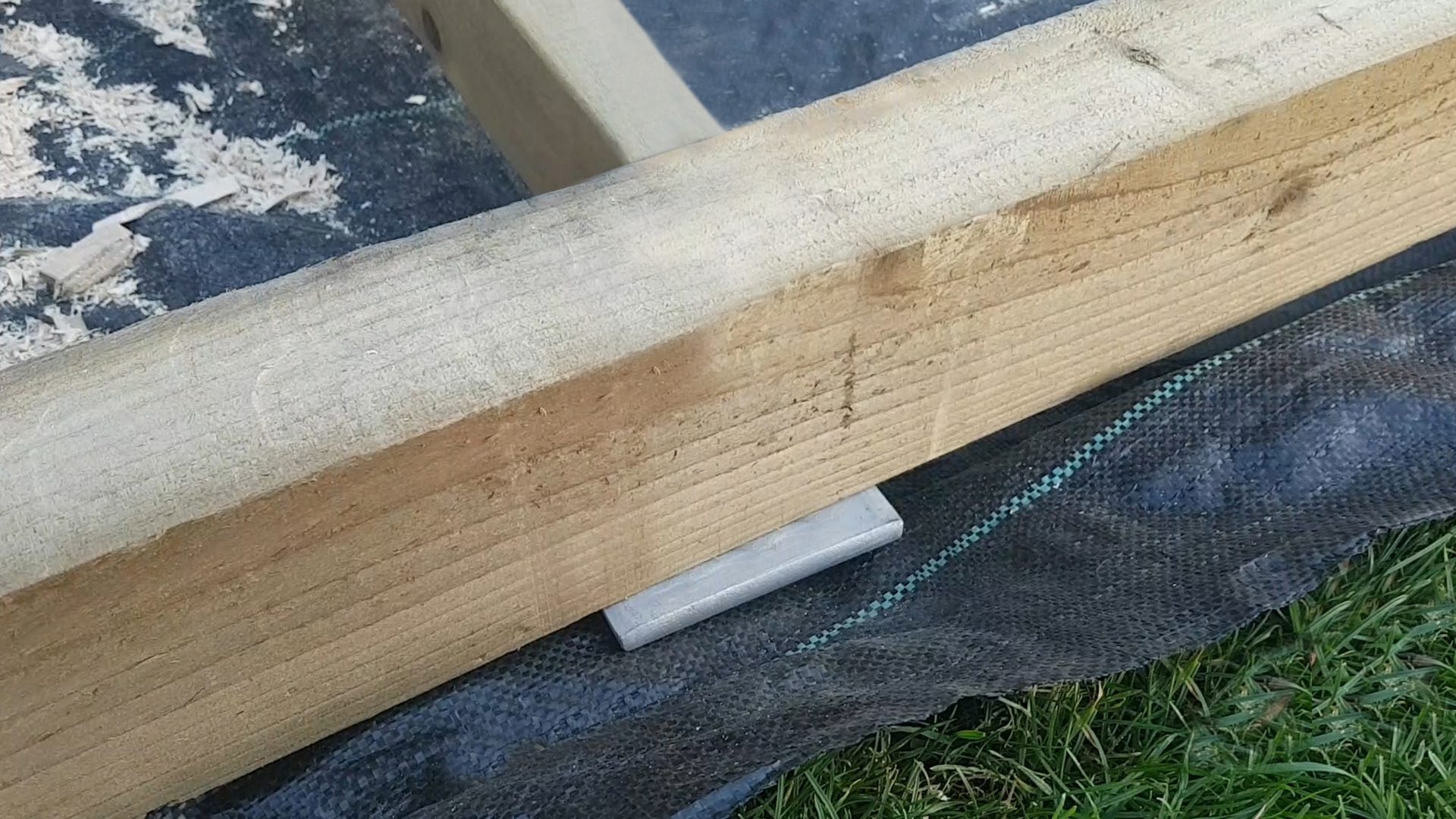
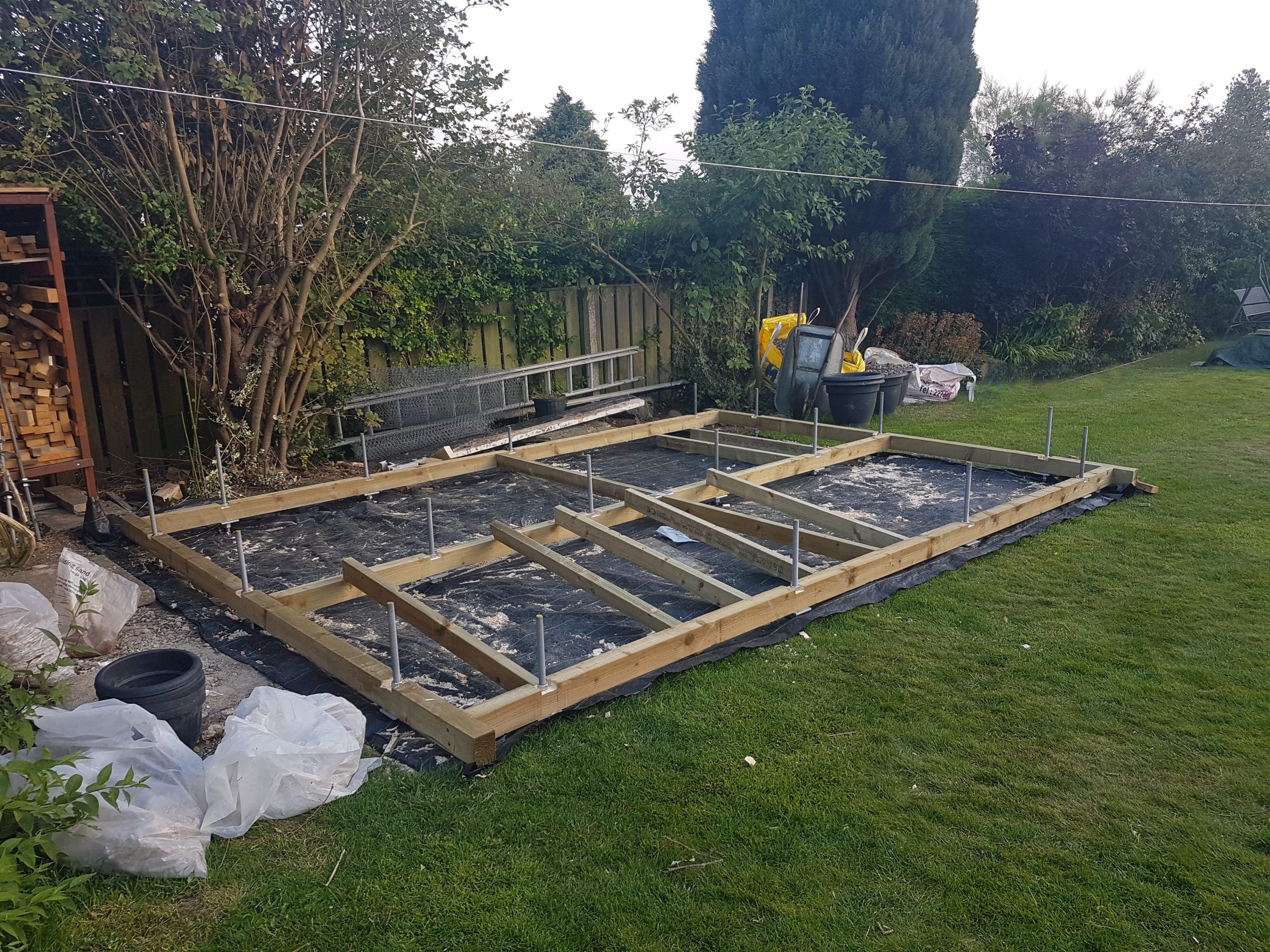
How to Construct the Base
- Firstly, construct the outer base frame and central beam using 4×3″ timber and 250mm timber screws to secure each length
- Build the inner frame from 4×2″ timber at 400mm centres and nail together with 125mm nails. This gives you a strong base with no movement or sagging.
- Add 100mm Rigid PIR Insulation inside the Garden room base and fix it in place with lengths of 2×1″ timbers running under the base.
- Ensure the insulation is a snug fit and fill any gaps with expanding foam. Using a foam gun gives you much more control and less mess. Don’t forget your foam gun cleaner.
- Lay the Floorboards using 22mm tongue and groove waterproof chipboard flooring. Glue each joint with wood glue and remove the excess once it is dry.
Walls
The back and sides of the Garden Room Frame are made from 4×2″ timber, and the front is made from 5×2″ timber.
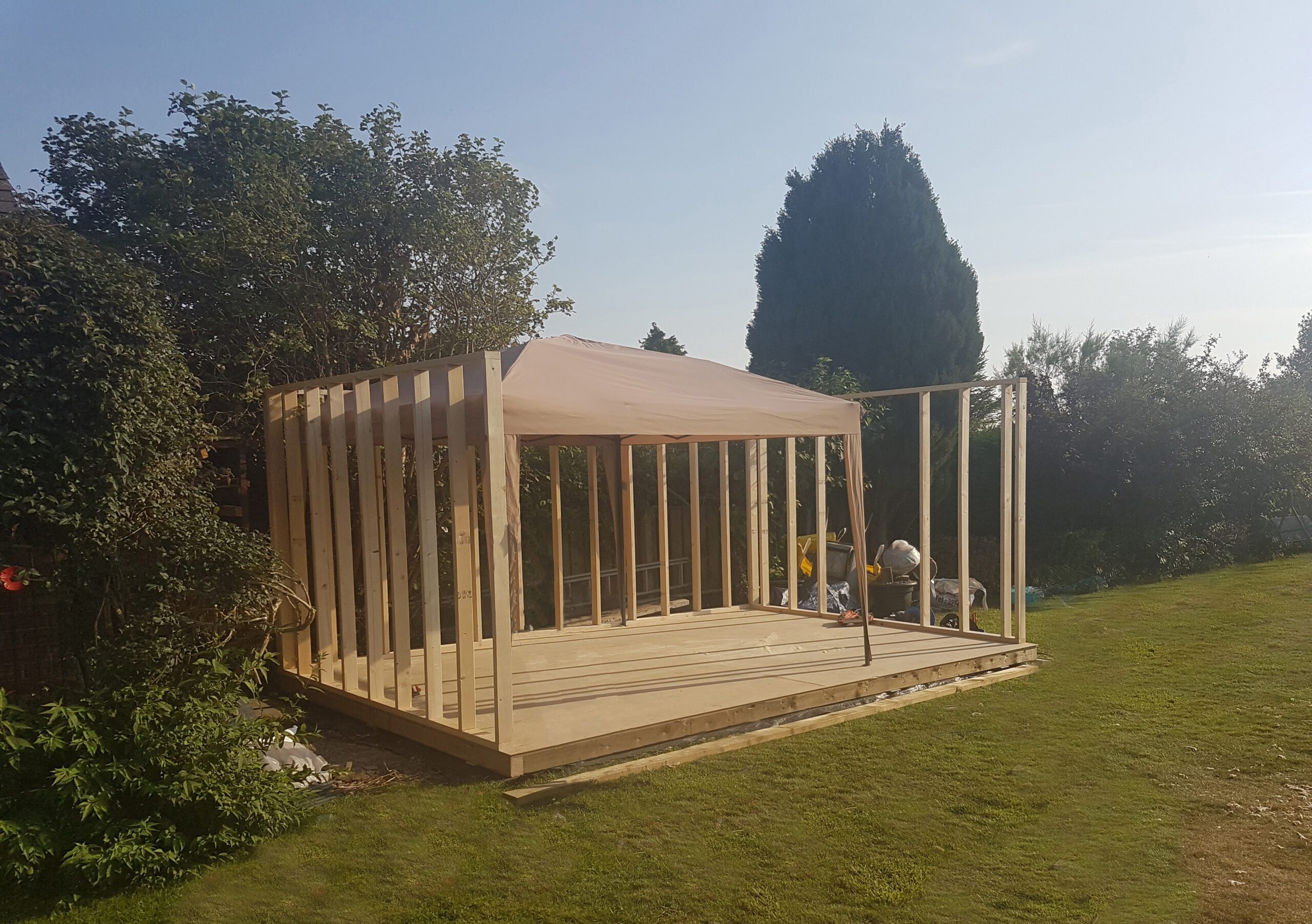
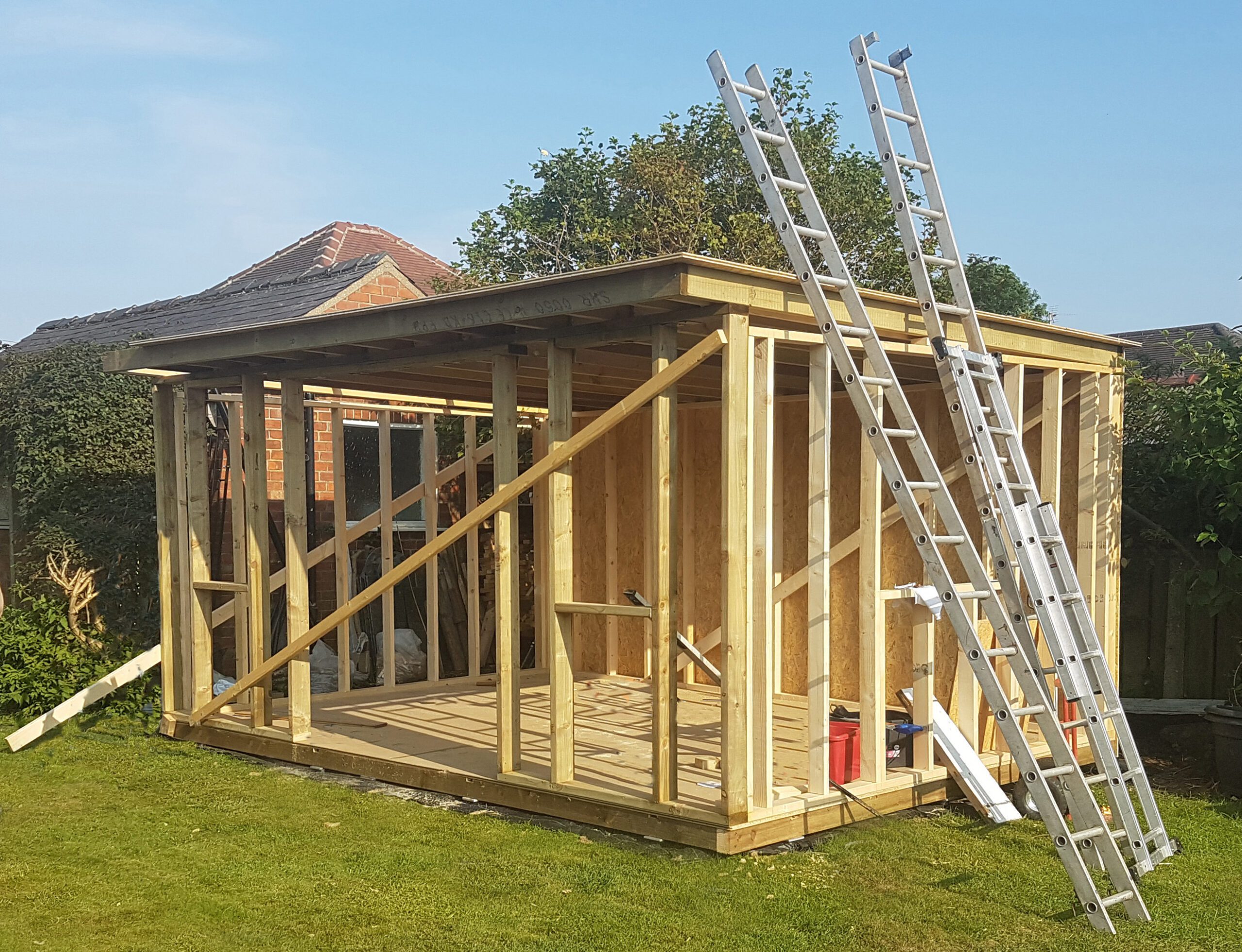
How to Construct the Walls
- Construct the back and sides of the wall structure from 4×2″ timber and make the front wall structure from 5×2″ timber. The 5×2″ of the front wall provides extra strength to support the weight of the roof, the door, and the window openings. This also gives a wider cavity for the door frame. All studs should be spaced at 400mm centres.
- Nail the structure together using 63mm and 90mm nails and a nail gun.
- It is vital at this point to get everything square and rigid before bracing the frame in all directions. Rushing this step will only cause issues further into the build.
Need Detailed Construction Drawings?
If you’re planning to build your own garden room, our downloadable PDF plans include:
- ✓ Full construction drawings
- ✓ Materials lists
- ✓ Quantity guides
- ✓ Roof details
- ✓ Wall details
- ✓ Timber frame layouts
Roof
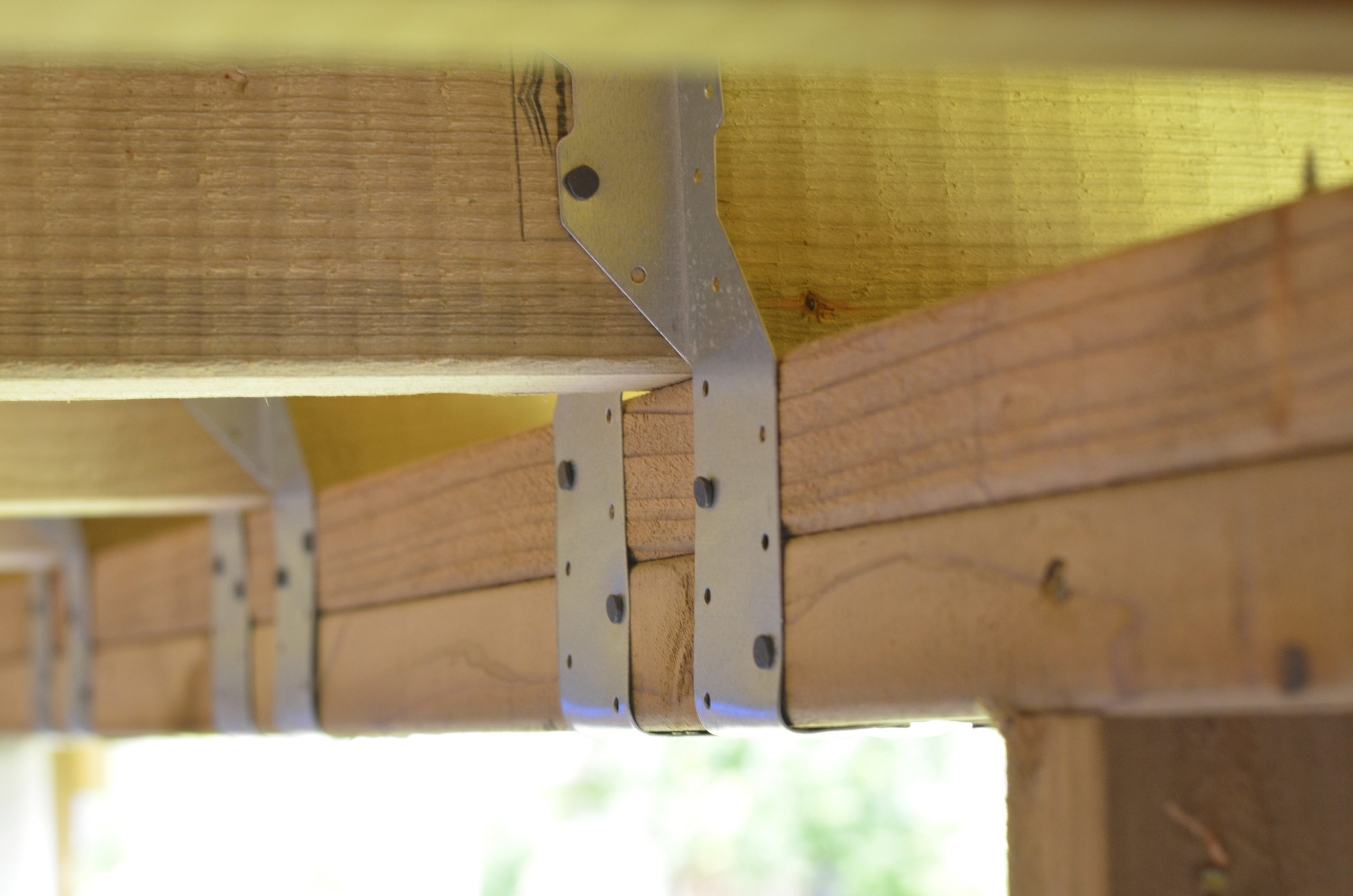
5×2″ timber is used for the main Garden Room roof structure and the roof is fastened down at the front using upside-down joist hangers.
How to Construct the Roof
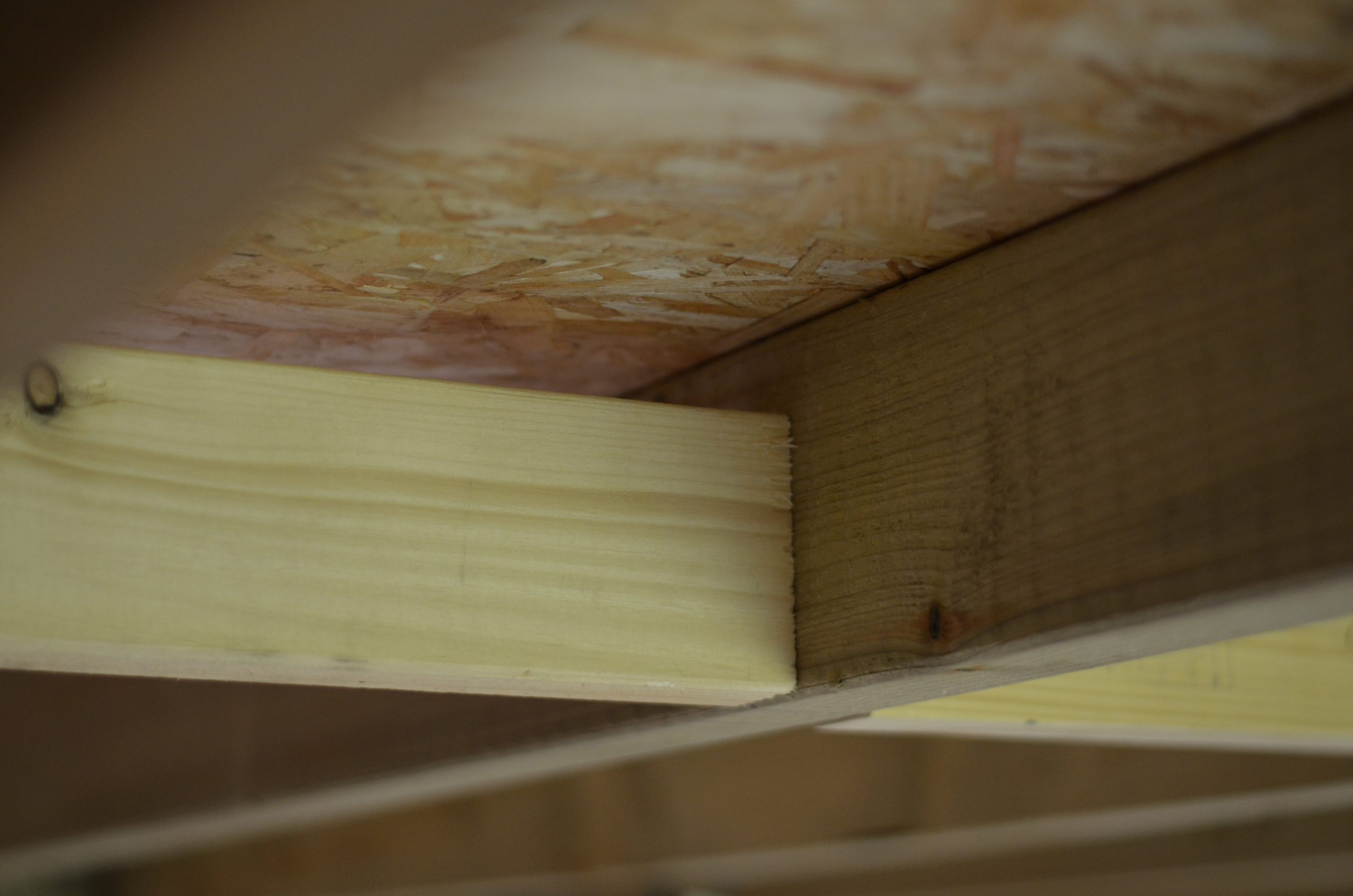
- Use 5×2″ timber for the main roof structure and 4×2″ timber for the noggins. This allows airflow through the roof and over the noggins.
- Fasten the roof down at the front using joist hangers mounted upside down. This prevents any movement if the wind gets under the overhanging canopy.
- The rear of the roof can be vented at this point by adding a series of holes or soffit vents; the front will be vented through the canopy.
Skip The Guesswork
Working out timber sizes, spans, material quantities and framing details can be time-consuming.
Our plans include detailed timber frame layouts and materials lists to help simplify the build process.
OSB
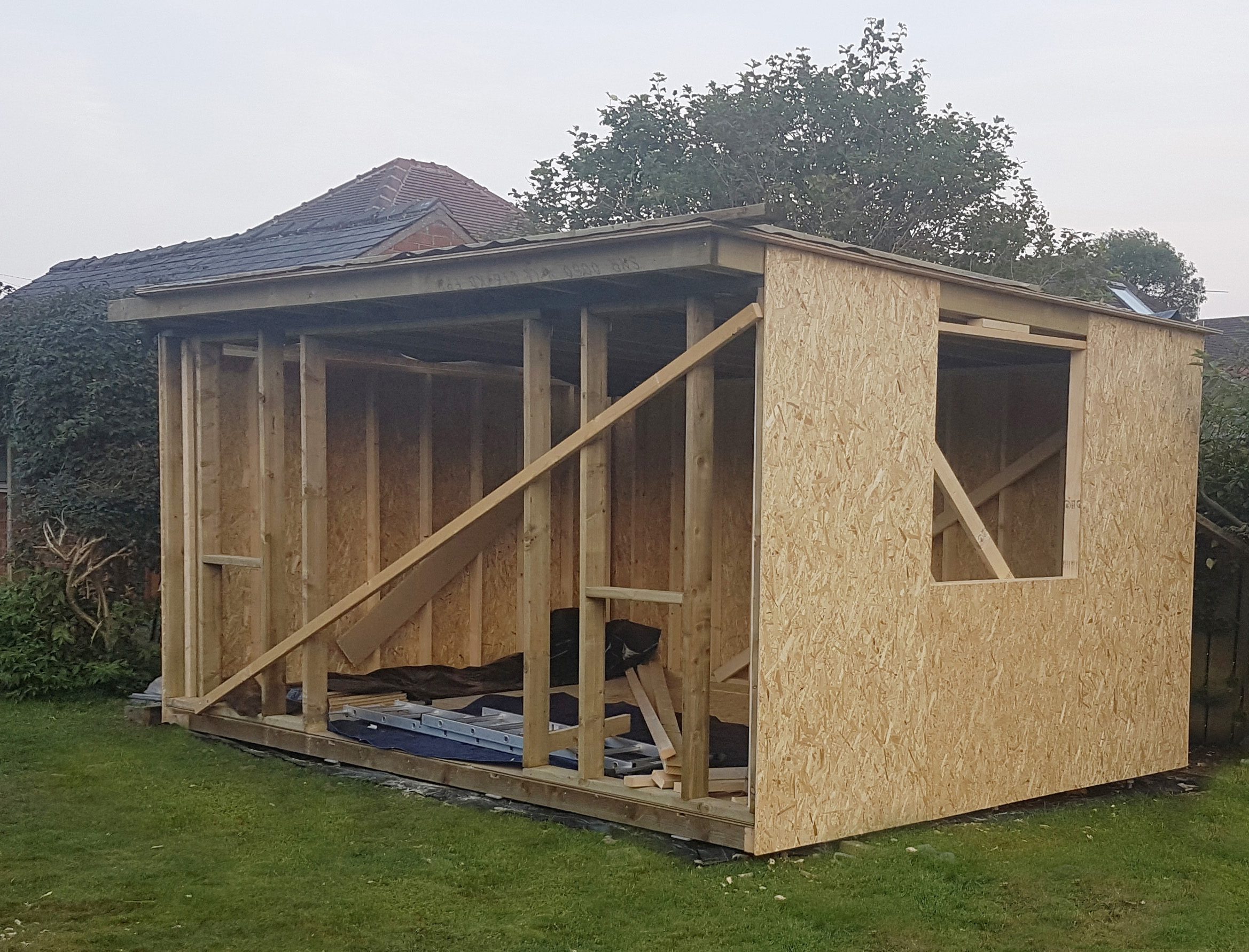
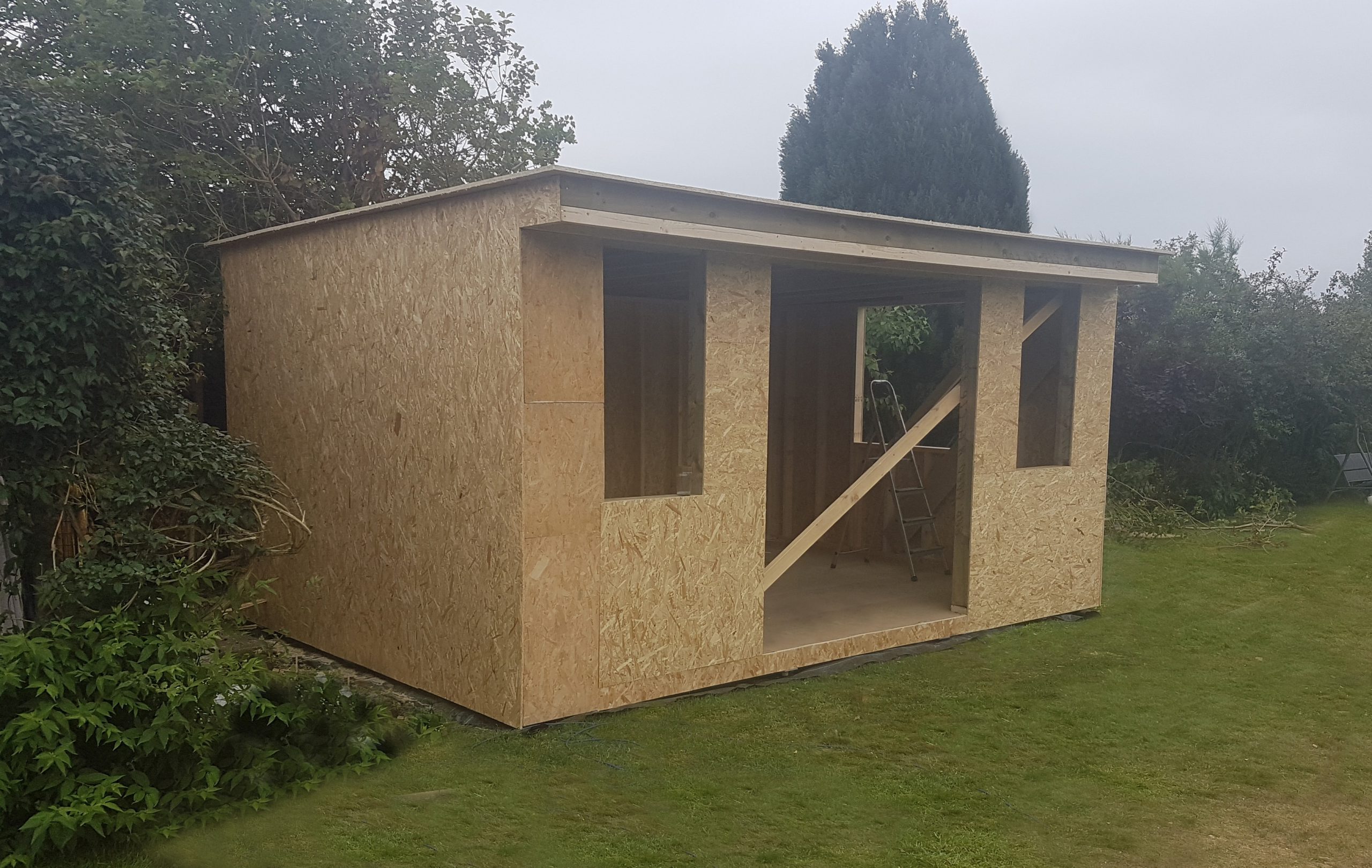
Wrap the outer framework of the Garden Room in OSB boards and the roof in Tongue and groove roofing board.
How to Install the OSB Walls
- Wrap the outside of the Garden Room Frame in OSB boards
- Most OSB boards are 2400mm high, making them ideal for use with full height, resulting in minimal wastage.
- Use 63mm nails to attach the OSB to the Frame.
- The OSB greatly increases the rigidity of the garden room and can help to square up the frame.
How to Install the OSB Roof
- Tongue and groove roofing boards are used for the roof.
- Fixed in place using 63mm nails
- glue along the tongue using wood glue for a seamless finish.
What size timber for a Garden Room
| Section | Timber Size | Notes |
|---|---|---|
| Base (Outer Frame & Central Beam) | 4×3″ timber | Fixed with 250mm timber screws |
| Base (Inner Frame) | 4×2″ timber | Joists at 400mm centres, nailed with 125mm nails |
| Base (Insulation Support) | 2×1″ timber | Secures 100mm Rigid PIR Insulation underneath the base |
| Flooring | 22mm T&G chipboard | Tongue & groove waterproof chipboard, glued at joints |
| Walls (Back & Sides) | 4×2″ timber | Studs spaced at 400mm centres |
| Walls (Front) | 5×2″ timber | Extra strength for roof and door/window openings |
| Roof (Main Structure) | 5×2″ timber | Secured with upside-down joist hangers at the front |
| Roof (Noggins) | 4×2″ timber | Supports airflow between rafters |
| Wall Sheathing | OSB boards | Fixed with 63mm nails for added rigidity |
| Roof Sheathing | T&G roofing board | Glued along tongue and nailed with 63mm nails |
UK Building Regs for Garden Room Frames
Garden room frames must comply with Permitted Development rules: <2.5m eaves height, <50% garden area, no front positioning. For structural integrity, follow BS 5268 (Timber Structures) or Eurocode 5.
Key Compliance Tips
- Timber Grading: Use C16/C24 graded timber (e.g., for 400mm spans).
- Load Calculations: Ensure frame supports snow/wind loads (e.g., 5×2″ for roofs >3m span).
- Rot protection: Treated timber for the base.
Common Framing Mistakes & Fixes
| Mistake | Issue | Fix |
|---|---|---|
| Uneven Base | Unsquare frame | Use a laser level; check twice. |
| Wrong Spacing | Weak structure | Stick to 400mm centres. |
| No Bracing | Collapse risk | Add diagonal braces pre-OSB. |
| Poor Venting | Condensation | Drill rear holes; add soffits. |
Next…


Vijay